

Businesses struggle to match the speed of digital change while the cyber threats evolve at an unprecedented rate. The year 2025 marks a transformative period for cybersecurity because emerging technologies, including generative AI and large language models (LLMs), create substantial changes in digital asset protection strategies for businesses.
The recent developments of AI models Claude 4 from Anthropic and xAI’s upcoming Grok 3.5 showcase the essential role of artificial intelligence in cybersecurity defense. The latest innovations enhance both coding accuracy and task performance, but also create new methods to detect threats before they occur and the cyber intuition, a predictive AI system that identifies threats invisible to legacy defenses..
The cyber intuition represents an AI-based anticipatory cybersecurity system that uses real-time data and advanced analytics, and predictive modeling to discover threats that both humans and traditional systems would overlook.
AI-Powered Threat Detection: Why It Matters Now?
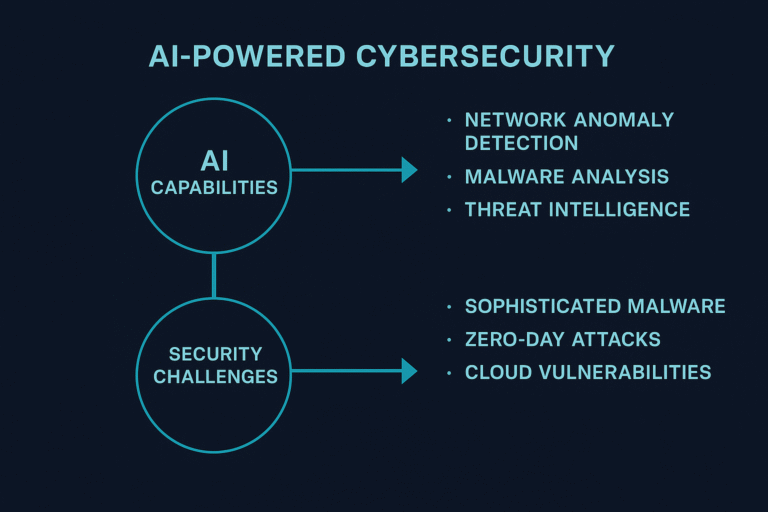
The techniques used by cybercriminals have evolved beyond simple brute-force hacking and basic malware creation. Advanced threat actors attack through infrastructure weaknesses and cloud platform errors while using hardware-based speculative execution vulnerabilities to exploit systems such as the Intel CPU CVE-2024-45332 vulnerability.
AI models, including Claude 4, deliver their impact in this situation. The integration of Claude 4 into Lovable’s systems resulted in a 25% decrease in syntax errors alongside a 40% increase in performance during recent weeks. AI models designed for coding tasks bring valuable benefits to cybersecurity through their capabilities for anomaly detection and pattern recognition, and quick decision-making.
The internal benchmarks of Anthropic’s Claude Opus 4 showed outstanding results on security tasks that require extended periods of execution while maintaining performance throughout complex detection assignments that challenge human analysts.
The Cyber Intuition stands as a revolutionary advancement in security measures
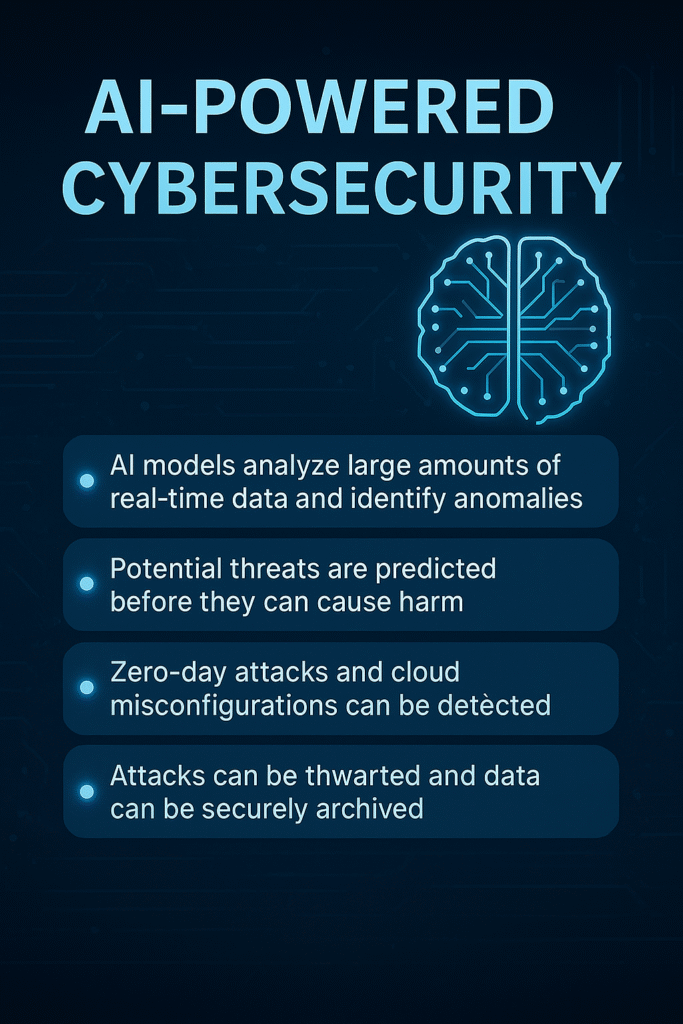
Current security systems depend on predefined signature detection methods and indicators of compromise. These AI cybersecurity models learn from new data continuously, which allows them to develop an “intuition” for detecting novel security threats.
An in-depth analysis of AI-based prevention for advanced ransomware attacks through The Cyber Intuition in our dedicated guide.
These AI models can:
- Network traffic anomalies, along with abnormal behavior patterns, can be detected
- The system uses vulnerabilities to create predictions about potential attack routes
- The system detects cloud services misconfiguration issues before attackers can use them.
- Zero-day threats become detectable through analysis of millions of data points
The machine learning-based system enhances its abilities through each new incident that occurs.
New AI Models Changing the Game
The AI security solutions that use Claude 4 coding-centric models receive competition from other players in the market. Elon Musk’s xAI plans to introduce Grok 3.5 as a generative AI platform that shows promise for enhanced long-context reasoning alongside improved coding assistance.
Grok 3.5 is expected to achieve major improvements, although it seems to be less precise than Claude in coding and detection, according to the first reports. The upcoming enhancements in Grok 3.5 have the potential to create a major shift in AI-assisted cybersecurity workflows because of their impact on AI-powered research and document parsing.
The growing influence of generative AI in data security practices requires businesses to invest in resilient, AI-friendly infrastructure. Critical to this is the adoption of reliable archive data solutions that safeguard AI-generated logs, forensic records, and operational data for investigations and audits.
Protecting Your Data in an AI-Powered World
The implementation of generative AI for security stack integration leads to higher data exposure risks. Security becomes more vital because models need extensive context information, which reaches 1 million tokens as seen in Google’s Gemini 2.5 Pro.
Leading organizations protect themselves from data exposure by implementing unified storage architecture frameworks that grant streamlined access to data through embedded security protocols.
The combination of AI-specific risk protection along with fast data recovery capabilities becomes possible through this security system during breach investigations.
How Spictera Helps Businesses Stay Ahead
Spictera enables businesses to leverage artificial intelligence for protecting their most precious digital resources. Our platform integrates powerful cybersecurity features with data archiving solutions and enterprise archive management capabilities that operate in unison with AI-powered systems.
Our services assist businesses through four main functions:
- The system enables businesses to safely store their extensive AI-generated data collections.
- The system protects users against possible hardware-level attacks through its built-in security features.
- The platform provides cloud storage security through built-in access control mechanisms.
- Our system enables quick recovery of forensic data for post-incident analysis.
Explore our resources on secure data archiving to learn how intelligent archival strategies improve cybersecurity resilience and AI workload management.
Cyber Protection Through AI
The battle between cyber attackers and defenders is escalating in 2025. Companies that modernize their security approach with AI technology gain better chances of defending against increasingly sophisticated threats.
By investing in cyber intelligence, proactive detection systems, and AI-powered threat prevention frameworks, businesses can better safeguard their data and systems. AI provides organizations with unparalleled capabilities, from identifying advanced malware and zero-day exploits to preventing cloud misconfigurations and infrastructure vulnerabilities.
The future of cybersecurity lies in predicting threats before they manifest. The time for businesses to adopt AI-enhanced data security and resilient data archiving strategies is now, and Spictera is ready to help!